

Maquila in Paraguay
Manufacture or provide services paying 1% tax
No corporate income tax, no tax on distributed profits and no import duty on machinery and raw materials. This is Paraguay's maquila regime, renewed in 2025 by a new law that also opened the door to service companies. This guide shows how much that changes a company's numbers, how it works, who can use it and the path to an approved program.
Sounds too good to be true? See where the "catch" is: every condition is in this guide, no fine print.
Download this guide as a PDF ↓To save or forward. The full guide is right below.
What's left for the owners: Brazil × Paraguay
A mid-sized manufacturer with heavy use of energy and imported raw materials, 20 employees, 2 partners and revenue of R$ 500 thousand per month. The same operation, with the same salaries and the same costs, set up in Brazil and in Paraguay.
In Paraguay, the partners keep 4.0 times more. Taxes and contributions take 33.3% of revenue in Brazil and 4.2% in Paraguay.
Where every R$ 100 of revenue goes (%)
- Imported raw materials
- Energy
- Staff
- Labor risk
- Other operating costs
- Taxes and contributions
- Left for the 2 partners
Hypothetical case, deliberately set at opposite extremes. In Brazil, the company is under the regime that leaves the least for the partners and provisions for the full labor risk; in Paraguay, it is approved under the maquila regime and uses the applicable benefits, with the partners residing in the country. Each activity has its own costs, rates and classifications, and the actual result depends on the specific case. The line-by-line calculation is in OMNI Guide No. 1, and the criteria are at the end of this guide.
See the line-by-line calculation in Guide No. 1 → · See the criteria ↓
Manufacturing in Paraguay costs less
The 1% gets attention, but the difference shows up in every cost line. For the same factory as in the simulation, item by item, per month:
Same simulation as OMNI Guide No. 1, in Brazilian reais. In Paraguay, raw materials pay no import duty and taxes on sales and profit come down to the single tax of R$ 5,000. Criteria at the end of this guide.
The cheapest power in the region
Paraguay's industrial electricity rate is reported as the lowest in Latin America, around 40% of Brazil's. For energy-intensive operations, this line alone changes the numbers.
A lighter payroll
In Paraguay, employers pay 16.5% to IPS, the local social security. In Brazil, INSS, RAT, third-party levies and FGTS add up to 34% to almost 40% of payroll, before collective-agreement benefits.
Less labor risk
Severance is 15 days of salary per year worked, with no penalty on a guarantee fund. In 2025, Brazil's Labor Courts paid R$ 50.6 billion to claimants.
Border logistics
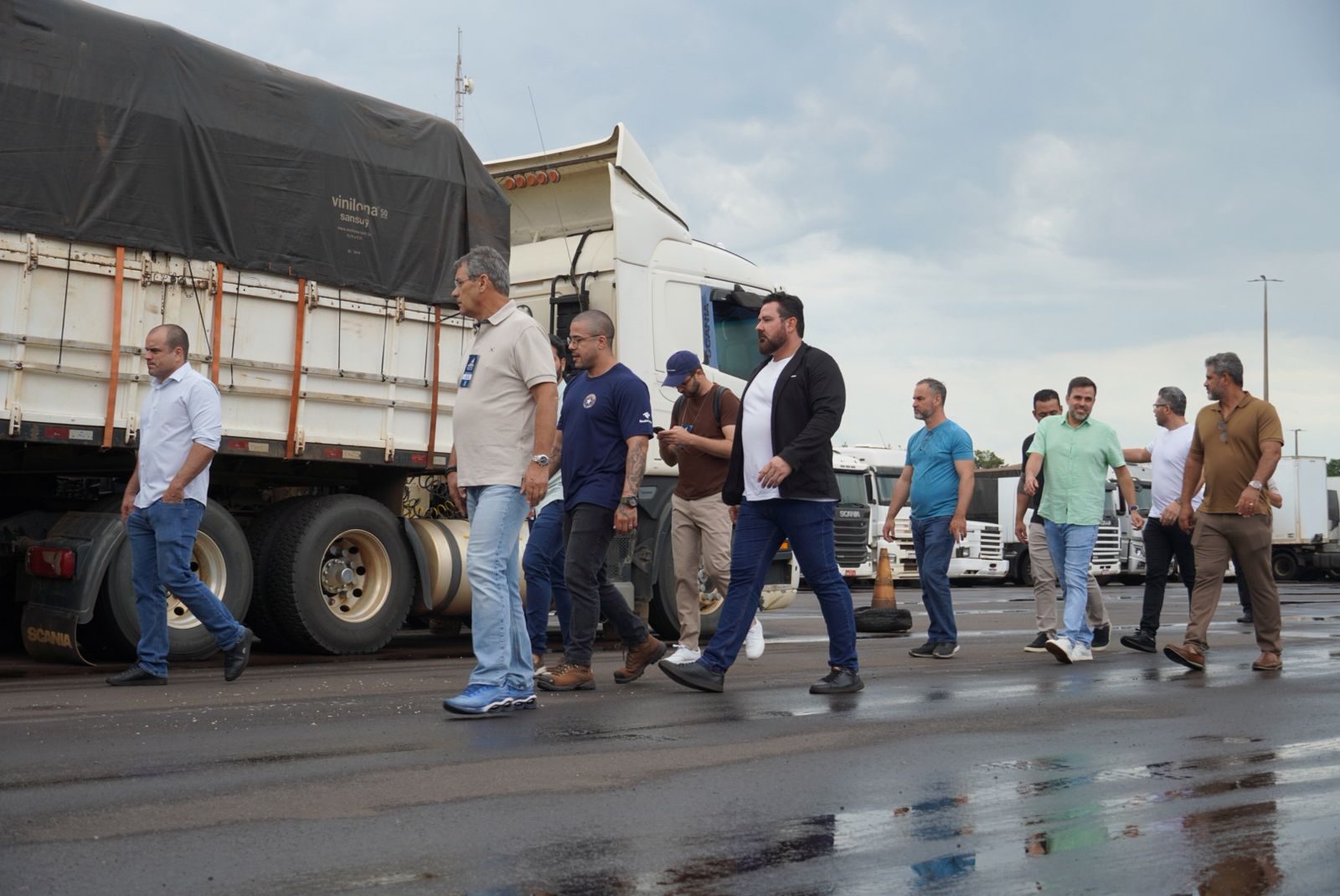
Salto del Guairá borders the Brazilian states of Mato Grosso do Sul and Paraná. From the industrial park, cargo goes straight to either border without crossing downtown, and imports clear the local customs office in 45 minutes at most.
A regime that keeps breaking records
Maquila exports of goods, in US$ million
In 2025, on top of US$ 1,262 million in goods, the maquila exported US$ 47 million in services.
Where it goes
January to July 2026. In 2025, 64% went to Brazil.
What is made
Share of 2025 exports.
Source: MIC/SE-CNIME, statistical reports for December 2025 and July 2026, with data from DNIT, BCP and IPS. Preliminary figures.
How it works, in one sentence
A company outside Paraguay, the parent (matriz), hires a company set up in Paraguay, the maquiladora, to manufacture, assemble, transform, repair or provide a service. What leaves the maquiladora goes abroad, and the whole operation pays the single tax.
The parent can be your company in Brazil. You keep the brand, the clients and the sales team there, and move to Paraguay the production, one stage of it or the service team.
- 1ParentYour company in Brazil or elsewhere contracts the production or the serviceMaquila Contract
- 2InboundMachinery, raw materials and inputs enter Paraguay with no import dutyTemporary admission
- 3MaquiladoraYour Paraguayan company produces or provides the service at Paraguayan costApproved program
- 4OutboundProduct or service exported, with a single 1% taxMaquila Export
Legal entities and sole-owner companies, Paraguayan or foreign, domiciled in Paraguay can hold a maquila program. The same company can run goods and services programs at the same time. For those operating with employees, banks and international contracts, OMNI structures the operation as a corporation (S.A.).
| Format | Who it is for |
|---|---|
| Pure maquiladora | A company set up to export. The most common path for those coming from Brazil. |
| Idle capacity | A company already selling in Paraguay that uses spare capacity to export under the regime. |
| Sub-maquila | A Paraguayan company that carries out part of a maquiladora's process. |
| Shelter | A maquiladora that receives technology and materials from a foreign supplier, which does not operate directly. |
Ley 7.547/2025, arts. 3, 4, 11, 25, 26 and 27; Decree 5.714/2026, arts. 9 and 10.
The advantages, one by one
One single tax of 1%
The whole operation pays 1% on the export invoice. It is the only national tax on the maquila.
In the law, it is the Maquila Single Tax: 1% on the value added in Paraguay or on the export invoice value, whichever is higher. Value added includes goods and services bought in the country, wages with social charges, depreciation of owned machinery and the maquila fee. It is filed monthly with DNIT. Ley 7.547/2025, art. 37; Decree 5.714/2026, art. 43.
Profits free of income tax, including on distribution
Maquila profits pay no corporate income tax and reach shareholders with no dividend tax in Paraguay.
Exemption from IRE, IDU and INR on income from the approved program. Company activities outside the program follow the general regime, with shared expenses prorated. Ley 7.547/2025, art. 38.
Machinery and raw materials with no import duty
You equip the plant and supply production without paying tax at entry. Money that would go to taxes stays in cash and investment.
Temporary admission with suspension of all import taxes. Machinery and equipment stay in the country while the program is in force; raw materials and inputs, up to 12 months, extendable for another 12. DNIT may require a guarantee. Ley 7.547/2025, arts. 14 and 38; Decree 5.714/2026, art. 24.
VAT on purchases comes back to your cash
VAT paid on purchases linked to the operation can be refunded, as with any exporter. That way, the tax does not become a cost.
Refund of the VAT tax credit under art. 101 of Ley 6.380/2019. For service maquilas, the refund is capped at 0.5% of the value added or the export invoice, and excludes professional fees. Ley 7.547/2025, art. 39.
Twenty years of stable rules
The program is valid for up to 20 years and can be renewed. Time to invest, grow and reap the results without surprises every time the government changes.
Term counted from approval, renewable for new periods of up to 20 years. Ley 7.547/2025, art. 13.
Export under maquila and sell in Paraguay as much as you want
A pure maquiladora can sell up to 10% of what it exported the previous year in the Paraguayan market. Those who want to sell more set up a mixed maquila: the exported share stays in the maquila, with all the benefits, and the share sold in Paraguay follows the general regime, with or without other incentives. All in the same company, with separate accounting for each part. There is no need to open another company or juggle corporate structures, as is common in Brazil.
Local sales by a pure maquiladora: notice to the CNIME Executive Secretariat, nationalization and general-regime taxes on that share (Ley 7.547/2025, art. 18; Decree 5.714/2026, art. 39). Mixed operation: income from other activities pays general-regime income tax, with shared expenses prorated (Ley 7.547/2025, arts. 26 and 38, d), and operations outside the regime keep separate accounting records (Decree 5.714/2026, art. 17).
Your team in Paraguay, your clients worldwide
Ley 7.547/2025 brought service maquilas into the regime: the company in Paraguay provides services remotely to clients outside the country and pays the same 1%. In 2025, this segment exported US$ 47 million.
Activities include software development and maintenance, technical support and help desk, customer service and telesales, collections, back-office, e-commerce operations and digital marketing.
Taxes on every R$ 100 billed from exported services
A service company billing R$ 200,000 a month exporting to clients abroad. In Brazil, exported services already pay no PIS, COFINS or ISS, and yet income tax and CSLL under presumed profit take R$ 9.88 of every R$ 100. In Paraguay, maquila income pays only the single tax.
The service is deemed exported when the invoice is issued, without VAT, and the operation is recorded in the regime's system. Ley 7.547/2025, art. 3; Decree 5.714/2026, art. 35.
From Paraguay to Brazil with no import duty
Products made in Paraguay that meet Mercosur rules of origin enter Brazil with zero import duty. And Paraguay has the most flexible rule in the bloc: up to 60% of the product can come from outside Mercosur, until the end of 2038.
In practice: components from Asia or anywhere in the world enter Paraguay tax-free, become a Paraguayan product in the maquila and go on to Brazil without Brazil's import duty.
Each product has its own origin requirement, checked by tariff classification (NCM), materials and process. Other import taxes in Brazil follow Brazilian rules. Mercosur CMC Decision 6/2023.
Where is the "catch"?
There is no catch, there are conditions. These are the ones, and they all fit a well-designed project:
- You need an approved program. The benefits apply to the operation described in the Maquila Program, approved by the ministries of Industry and Commerce and of Economy.
- The benefit is for what is exported. The maquila covers production and services that go outside Paraguay. To sell more than 10% locally, the operation becomes mixed: the local share pays general-regime taxes, with separate accounting, in the same company.
- There must be production or a service. A purely agricultural, forestry, fishing or mining activity, with no industrial process, does not qualify. Agribusiness qualifies when it adds value: processing, industrialization, packaging.
- Brazil is watching too. Brazilian tax residents report the Paraguayan company in Brazil, and its profits may be taxed there, depending on the structure (Brazilian Law 14.754/2023). Purchases and contracts made from Brazil follow Brazilian rules. That is why who the parent is, who the shareholders are and where they live are part of the design from day one.
- There is a routine to follow. Inventory control in the system, a monthly tax return, a quarterly report on investment and jobs, and accounts under international standards. With the routine up to date, the regime runs predictably.
That is exactly what the Personalized Feasibility Diagnostic analyzes: it confirms whether your operation qualifies, in which format and how much you gain from it.
From project to approved program
- 1DiagnosticActivity, markets, inputs, shareholders and expected gainFirst of all
- 2Company in ParaguayPersonal documents, S.A., RUC and registrationsGuides No. 1 and No. 2
- 3Contract and programContract with the parent or letter of intent, plus the Maquila Program100% online application
- 4ApprovalCNIME review and resolution of both ministries45 to 90 days
You can start without a signed contract. The application can be filed with a letter of intent between the parent and the maquiladora; the contract is submitted up to 180 days after approval.
The application is online. The program is uploaded to the regime's electronic platform (SIMEX, on the Ventanilla Única de Exportación), with the activity, plant address, capacity, jobs, investment, goods to import and planned exports.
Review and approval in 45 to 90 days. That is the timeframe we see in practice under the new rules, with CNIME meeting every month. Once approved, the company has up to 18 months to start operating, extendable once.
Ley 7.547/2025, arts. 5, 11 and 15; Decree 5.714/2026, arts. 7 and 8; MIC, Maquila 2025 presentation. Review time: OMNI's experience in 2026.
Why Salto del Guairá
Salto del Guairá is the first and only municipality in Paraguay with a planned industrial park. It borders the Brazilian states of Mato Grosso do Sul and Paraná, a few hours from Brazilian airports, and is the capital of Canindeyú, one of the country's major farming regions. The Municipality can grant land and warehouses in the park to companies that set up there, with approval of the Municipal Board and commitments such as local job creation.
Less time on the road, cheaper freight. Leaving the park, cargo takes either border without crossing downtown, which is very busy with shopping tourism. The same applies in reverse to imported raw materials, inputs and machinery, with one more advantage: at Salto customs, the rule is to clear imports in 45 minutes at most, far less than in Asunción and much less than in Ciudad del Este.
For industry selling to Brazil, the math is simple: maquila, Paraguayan costs and a plant minutes from the border, with cargo away from downtown traffic.
How OMNI supports you
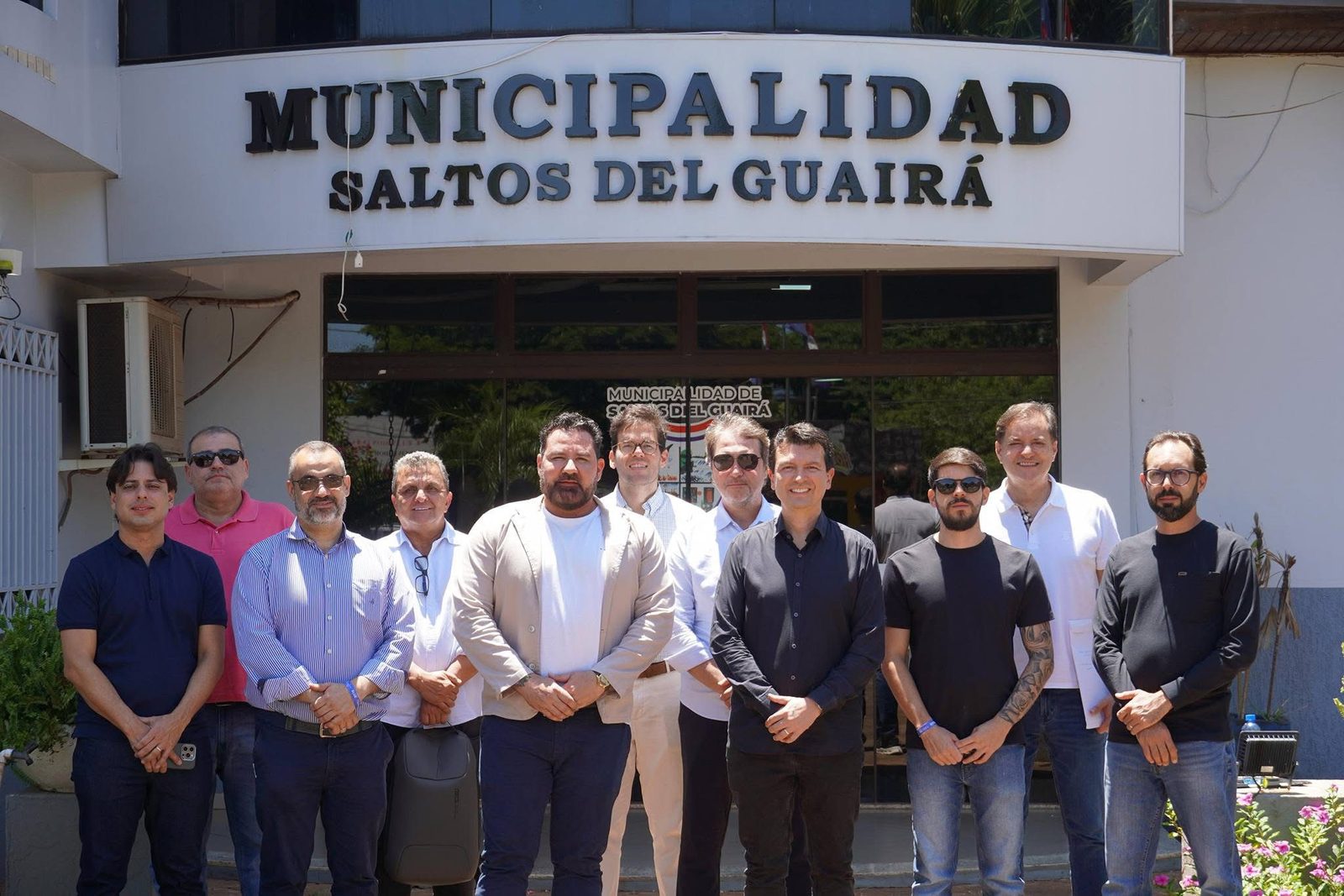
OMNI HOLD S.A. (Omni Hold PY) is based in Salto del Guairá and supports Brazilian business owners from the first study to the plant's daily routine:
Analyzes product or service, inputs, markets and the shareholders' situation, and indicates whether the maquila is the best path and in which format.
Shareholders' personal documents and incorporation of the S.A., with bylaws ready for the regime.
From the letter of intent to the approval resolution, with the program prepared and followed up.
Application for land or a warehouse in the industrial park, accounting, returns and reports kept up to date.
Frequently asked questions
Do I need to live in Paraguay to have a maquila?
Not necessarily. The company must be in Paraguay, and whoever manages it and represents it before DNIT needs Paraguayan documents. Shareholders can live in Brazil.
Can my company in Brazil be the parent?
Yes. The parent is the company domiciled outside Paraguay that hires the maquiladora, and it can be your Brazilian company.
What is the tax?
A single 1% tax, calculated on the export invoice or on the value added in Paraguay, whichever is higher. Maquila profits pay no income tax and no dividend tax in Paraguay.
Can I bring machinery from Brazil?
Yes. The program's machinery and equipment enter with no import duty and stay in the country while the program is in force.
Does the product enter Brazil with no import duty?
Yes, when it meets Mercosur rules of origin. Paraguay can use up to 60% of materials from outside the bloc until 2038. Other import taxes follow Brazilian rules.
Can a service company be a maquila?
Yes. Since Ley 7.547/2025, services provided remotely to clients outside Paraguay qualify with the same single 1% tax.
Can I sell in the Paraguayan market? More than 10%?
Yes. A pure maquiladora sells up to 10% of what it exported the previous year. To sell more, the operation becomes a mixed maquila: exports keep all the benefits, and local sales follow the general regime, with separate accounting, in the same company.
How long does approval take?
In current practice, 45 to 90 days for review and approval. The application is online and CNIME meets every month. With the company ready, the program can be filed right away.
How long does the benefit last?
Up to 20 years per program, renewable.
Can farming be a maquila?
When there is an industrial process, yes: processing, industrialization and packaging, for example. A purely primary activity does not qualify.
Can I see it before deciding?
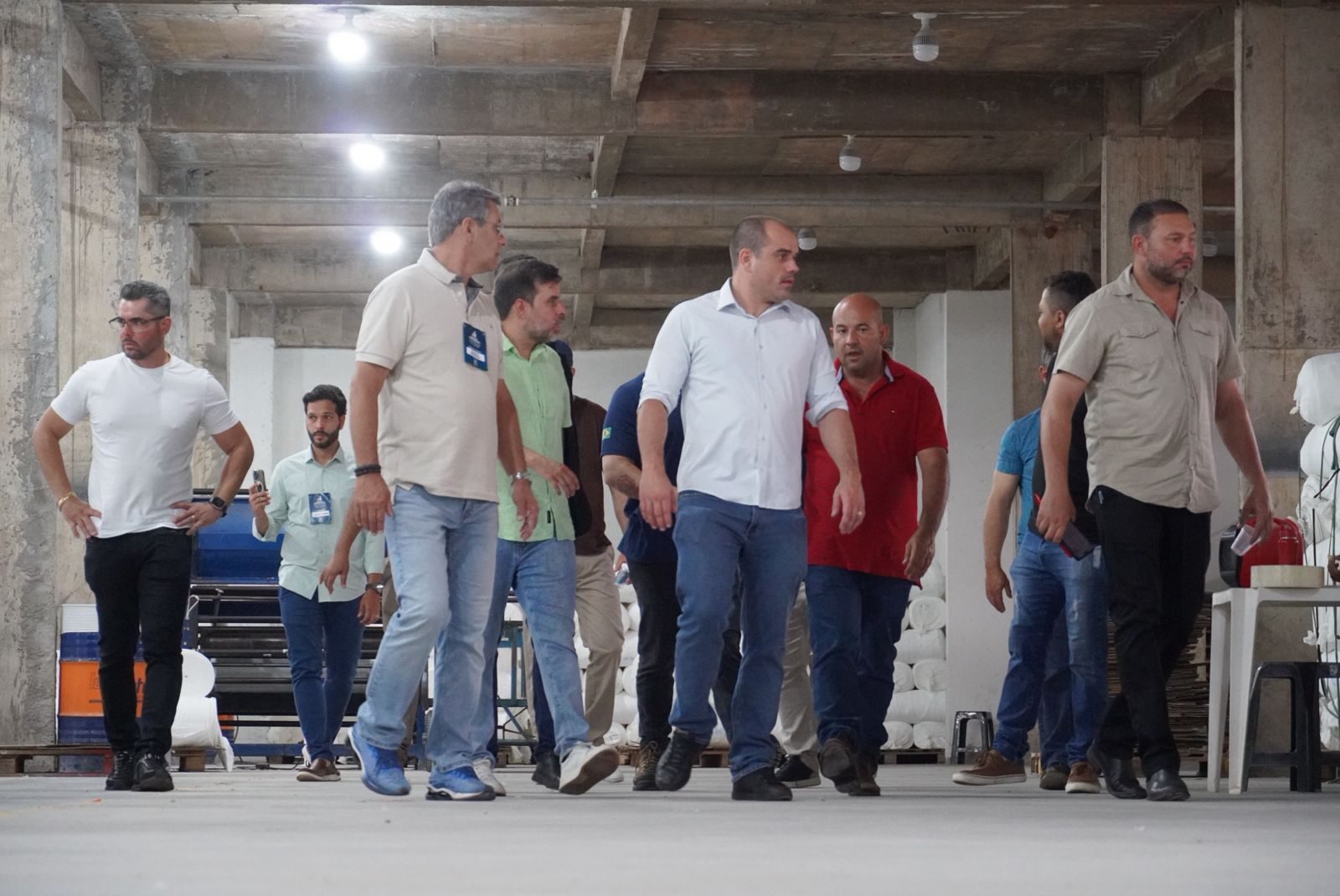
Yes. The Business Mission takes business owners to Salto del Guairá to visit the industrial park, customs and local institutions, and talk to people already operating in Paraguay.
What is the next step for your project?
OMNI Setup Diagnostic
Six quick questions about your activity, the stage of your project and your timeline. At the end, you see the recommended path: Business Mission, orientation meeting, support for the opening or feasibility study.
Take the free diagnostic →Already have a defined project? Talk directly to the team

WhatsApp support
Point your camera at the code or click the button below.
Start a WhatsApp chat →+55 62 98444-9688
Our channels
 OMNI HOLD
 Business Mission
 Câmara de Comércio Brasil-Paraguay
 Telegram channel
 WhatsApp channel
 WhatsApp community group
 OMNI Instagram
 Chamber Instagram
 YouTube
 LinkedIn
Simulation criteria
The factory simulation is the same as in OMNI Guide No. 1. The services comparison assumes a Brazilian company under presumed profit billing R$ 200,000 a month from exported services, with 15% IRPJ and 9% CSLL on the 32% presumed base and a 10% surcharge on presumed profit above R$ 20,000 a month; revenue from exported services pays no PIS, COFINS or ISS, under the legal conditions. In Paraguay, service maquila income pays the 1% single tax.
The simulation compares the same hypothetical company at two extremes: in Brazil, in the scenario that leaves the least for the partners; in Paraguay, with every benefit the law allows. The criteria below are open to critique, and anyone who wants to discuss a number can talk to the OMNI team.
Common assumptions
Revenue of R$ 500 thousand per month, or R$ 6 million per year. Twenty employees with an average salary of R$ 3 thousand and two partners with a management fee (pró-labore) of R$ 10 thousand each. Raw materials imported from a country with no trade agreement, with a CIF value of R$ 80 thousand per month (16% of revenue), and an energy bill of R$ 50 thousand per month in Brazil (10% of revenue), typical of an activity that uses a lot of both. In Brazil, the company has an operating profit of 15% of revenue before labor risk provisions, the market standard for manufacturing; the other operating costs (rent, maintenance, domestic inputs, freight, administration and sales) were calculated to close that margin, total R$ 51,971 per month and are repeated unchanged in Paraguay. Revenue is the same in both countries; taxes the buyer may pay when importing are left out of the company's calculation.
Brazil
Tax regime. The Simples Nacional does not apply, because revenue exceeds R$ 4.8 million per year. We calculated the presumed-profit regime (lucro presumido), already including the 10% increase in the presumption on revenue above R$ 5 million per year (Supplementary Law 224/2025), and the actual-profit regime (lucro real); actual profit left less for the partners and was the one adopted. Under actual profit: IRPJ of 15% plus a 10% surcharge on profit above R$ 20 thousand per month, CSLL of 9%, PIS and COFINS of 9.25% with credits on imports, energy and half of the other costs. ICMS of 18% on sales, with a credit for the ICMS on imports and energy. IPI was treated as neutral (the debit on sales offsets the credit on purchases), as were the 2026 test-phase CBS and IBS, since they are creditable.
Imports. Import duty of 35%, the ceiling Brazil may apply to manufactured goods under its WTO commitments, used here as the worst case; for most raw materials the effective rate is lower. PIS and COFINS-import of 11.75%, AFRMM of 8% on ocean freight (estimated at 10% of the CIF value) and customs expenses of 2%.
Payroll. Employer INSS of 20%, RAT of 3% multiplied by the maximum FAP of 2.0 (6%), third-party contributions of 5.8% (salário-educação, Senai, Sesi, Sebrae and Incra) and FGTS of 8%, all on salary, 13th-month salary and vacation with the constitutional one-third bonus. Collective bargaining benefits (meal voucher and net transportation voucher) of R$ 800 per employee per month.
Labor risk. Full provision for the 40% penalty on FGTS deposits; paid notice period of one salary, with FGTS, for a 40% annual turnover; and a reserve for labor lawsuits of 3% of the annual payroll, estimated from the amount paid by the Labor Courts to claimants in 2025 (R$ 50.6 billion), in proportion to the country's formal wage bill, plus court costs and attorney fees.
Partners. Employer contribution of 20% on the pró-labore; partner INSS of 11% up to the cap and income tax under the 2026 table, at the 27.5% rate (above R$ 7,350 per month there is no reduction). Dividends stay below R$ 50 thousand per month per partner and each partner's annual income stays below R$ 600 thousand, so there is no 10% withholding and no minimum tax (Law 15,270/2025).
Paraguay
Maquila. Company approved under the maquila regime, exporting its output: single 1% tax on sales, exemption from IRE and from IDU on maquila profits (Ley 7.547/2025, arts. 37 and 38) and entry of raw materials under temporary admission, with no import duty or IVA. We added 5% of the CIF value for additional freight to Paraguay, which is landlocked, and 2% in clearance expenses.
Energy. One third of the Brazilian bill. A regional survey published in July 2026 ranks Paraguay's industrial tariff as the lowest in Latin America, at about 40% of Brazil's; one third is the assumption adopted for energy-intensive activities.
Payroll. Same salaries in reais. Employer IPS of 16.5% on salary and vacation; aguinaldo of one salary per year; vacation of 12 business days per year; family allowance estimated at one child per employee.
Labor risk. Full provision for dismissal severance of 15 days' salary per year worked; preaviso (notice) of 45 days for the same 40% turnover; and a reserve for lawsuits of 1% of payroll.
Partners. Conservative assumption of IPS contributions also on the pró-labore (16.5% employer and 9% partner). The partners are directors residing in Paraguay: personal income tax applies to net income, after deducting personal and family expenses in the country, estimated at R$ 6 thousand per month per partner, in brackets of 8% to 10%.
What the simulation does not show
The Paraguay result assumes partners with tax residency in the country, that is, with a definitive departure from Brazil. Anyone who remains a tax resident of Brazil may have the Paraguayan company's profit taxed in Brazil, depending on the structure (Law 14,754/2023), and the design changes. The simulation also does not include the investment in relocating, the learning curve of the new operation or the particularities of each sector, which are covered in the feasibility study.
Sources
- Ley 7.547/2025, Maquila Regime, Library and Central Archive of Congress (BACN)
- Decree 5.714/2026, regulating Ley 7.547/2025, Ministry of Industry and Commerce
- Maquila regime statistical report, December 2025, MIC/SE-CNIME
- Maquila regime statistical report, July 2026, MIC/SE-CNIME
- Maquila 2025, Ministry of Industry and Commerce presentation
- Maquila incentives fact sheet, MIC (December 2024)
- Mercosur CMC Decision 6/2023, non-originating materials
- Brazilian Law 14.754/2023, controlled entities abroad
- Industrial electricity rates in Paraguay and Brazil, Última Hora (July 2026)
- OMNI Guide No. 1, How to open a company in Paraguay: full simulation and sources for the cost comparison
About the author. Paulo Roberto Resende Nascimento is Brazilian, married, a business owner and a lawyer in Brazil, where he practices as a specialist in corporate law and international trade and serves as a court-appointed administrator (administrador judicial). In Paraguay, he is a business owner and has spent more than 10 years helping clients set up in the country. He is a managing partner of OMNI HOLD S.A., the Paraguayan company that offers this guide and the services described in it, with no direct or indirect connection to his professional activity in Brazil. He is a founding member of the Brazil-Paraguay Chamber of Commerce (Câmara de Comércio Brasil-Paraguay), established in 2017, a nonprofit organization of which he is currently vice president.
About this guide. Informational material presenting the services of OMNI HOLD S.A., based on Paraguayan laws and regulations and official data available in November 2026. Headlines and highlights summarize the general rule; conditions, exceptions and technical detail are in the text itself and the sources. Benefits depend on an approved program and on how each activity qualifies, and the simulations are hypothetical cases, with published criteria, that do not guarantee results. It creates no rights or obligations, does not replace the analysis of the specific case, carried out in the Personalized Feasibility Diagnostic, and has no purpose of attracting clients for legal services in Brazil.